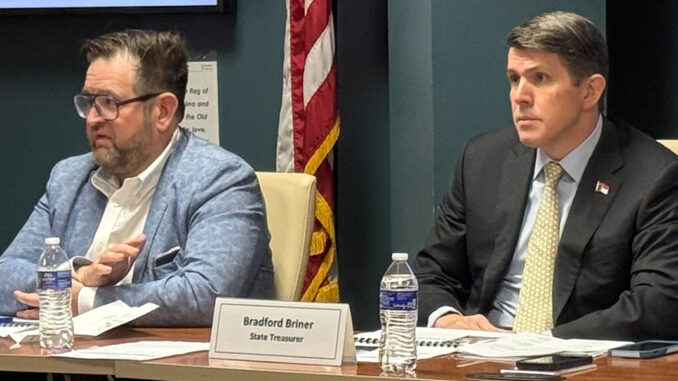
RALEIGH — North Carolina Treasurer Brett Briner discussed the State Health Plan and the status of the pension fund during his first “Open Access” call with media on Nov. 27.
The treasurer said the State Health Plan (SHP) is facing a $507 million deficit in 2026 and will “require belt tightening” that may include increased premiums.
When asked if an increase could mean $15 or $20 monthly, Briner said a $20 premium increase was “not far off from” what’s been communicated publicly already. He added that increase would be “at the bottom end of the income distribution,” and a premium increase would be more for those with higher incomes. He added that the SHP board would be looking at its options at an upcoming meeting.
The health plan board is considering the ability to charge differential premiums based on income, allowing for a more equitable distribution of costs among SHP members, and Briner said he thinks the idea “enjoys substantial support across the entire board.”
“We aspire to make this health plan better for all the members over time,” Briner said.
Briner also indicated he was open to revisiting GLP-1 weight loss drugs being covered under the SHP in 2026.
Briner also highlighted issues with the pension fund’s performance and its $16 billion deficit.
“On the investment management side, if you look at the Boston College Center for Retirement Research, they provide this data that North Carolina is either 49th or 50th in investment performance over any period,” said Briner. “That challenge manifests the inability to provide cost of living adjustments to our retirees over time. That is something that we are actively seeking to change.”
Briner indicated he plans to adjust the pension’s asset allocation from its current 48% equity / 52% cash and fixed income split closer to the national average of 70/30. He said he’s also hired four new Investment Advisory Committee members to work on the issues.
Briner, who chairs the Local Government Commission, said he’d like to address restrictions municipalities face in seeking funding by modernizing bond-selling practices and making the process more flexible.
Addressing the SHP’s Clear Pricing Project (CPP), Briner noted the program was up for review in 2026 and that while there were multiple deadlines for providers to enroll, many failed to comply.
The CPP was created in 2018 under former Treasurer Dale Folwell with the aim of getting health providers to be transparent in their pricing and billing. SHP members enjoyed no or low copays for providers who joined the CPP. The CPP was voluntary and had no enforcement functions.
“We have to work with all stakeholders,” Briner said of pricing transparency and finding a better long-term solution.